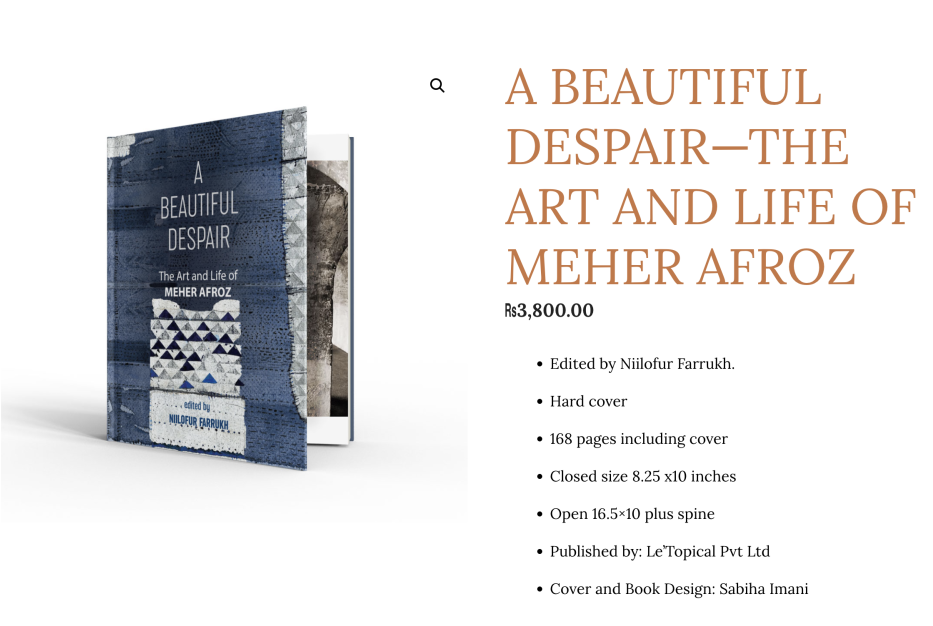
A Beautiful Despair: The Art and Life of Meher Afroz

2020

Publisher: Le Topical (PVT) Ltd.
Editor: Niilofur Farrukh
Designer: Sabiha Imani

A Beautiful Despair: The Art and Life of Meher Afroz

2020

Publisher: Le Topical (PVT) Ltd.
Editor: Niilofur Farrukh
Designer: Sabiha Imani

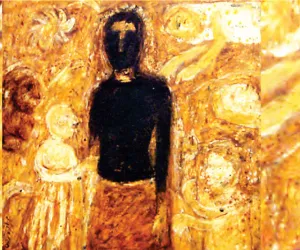
A Beautiful Despair is a collection of texts on Meher Afroz, one of the most significant artists of Pakistan. Her art explores issues of decolonization by excavating the lost cultural architecture of language, literature and iconography. Memories and experiences of Lucknow, where she was born and Karachi, where she made her home since the 1970s, act as a compass that reconnects her to pathways of history. Gayatri Spivak calls this erasure that Meher reclaims, ‘epistemic violence’, brought about by colonial exclusion, dispossession and displacement.

INTRODUCTION

My first meeting with Meher Afroz goes back half a century when she had just moved to Karachi from Lucknow. Since then, | have followed her career first as her student and later as a friend and art critic, but always as someone who has been inspired by the intense trajectory of this significant artist of Pakistan.

The impenetrable darkness of her early work, while it perplexed many, was for me a space that offered obscure stories of the disenfranchised, the forgotten and of a society losing its moral compass as it clutched on to tools of survival.

Meher is a reflective artist and her oeuvre comes after periods of incubation. Whenever a new body of work appears the audience usually has a visceral response to it, often leaving its conceptual complexity undiscussed. | have always felt the urgency to make visible the deep and dense cultural layers that are sedimented in her oeuvre and map the intersections between her art and history.

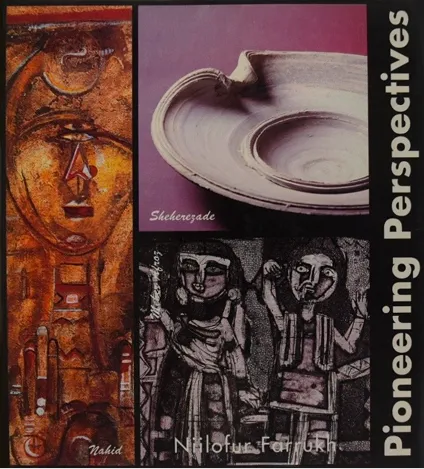
My initial dilemma was to decide between authoring the book or inviting others to contribute. | opted for the second, as | have written extensively on Meher’s art practice since the 1990s, which is already available. Besides this, she was also a part of my first book Pioneering Perspectives (1998). Putting together an anthology also held greater appeal as it would give me the opportunity to explore her art through the lens of diverse art thinkers. Texts by art critics, curators, art historians, artists, a filmmaker, an anthropologist.

BOOK REVIEW

She believes that words in Urdu language have deep meanings that embrace a whole life in it and she can produce a number of series by just taking up a single word.

BUY BOOK

https://chawkandi.co
+92 21 35373582

meher afroz with niilorfur farrukh, 2018, karachi

ESSAY

Thinking through Urdu: Embedded Epistemologies

By Niilofur Farrukh

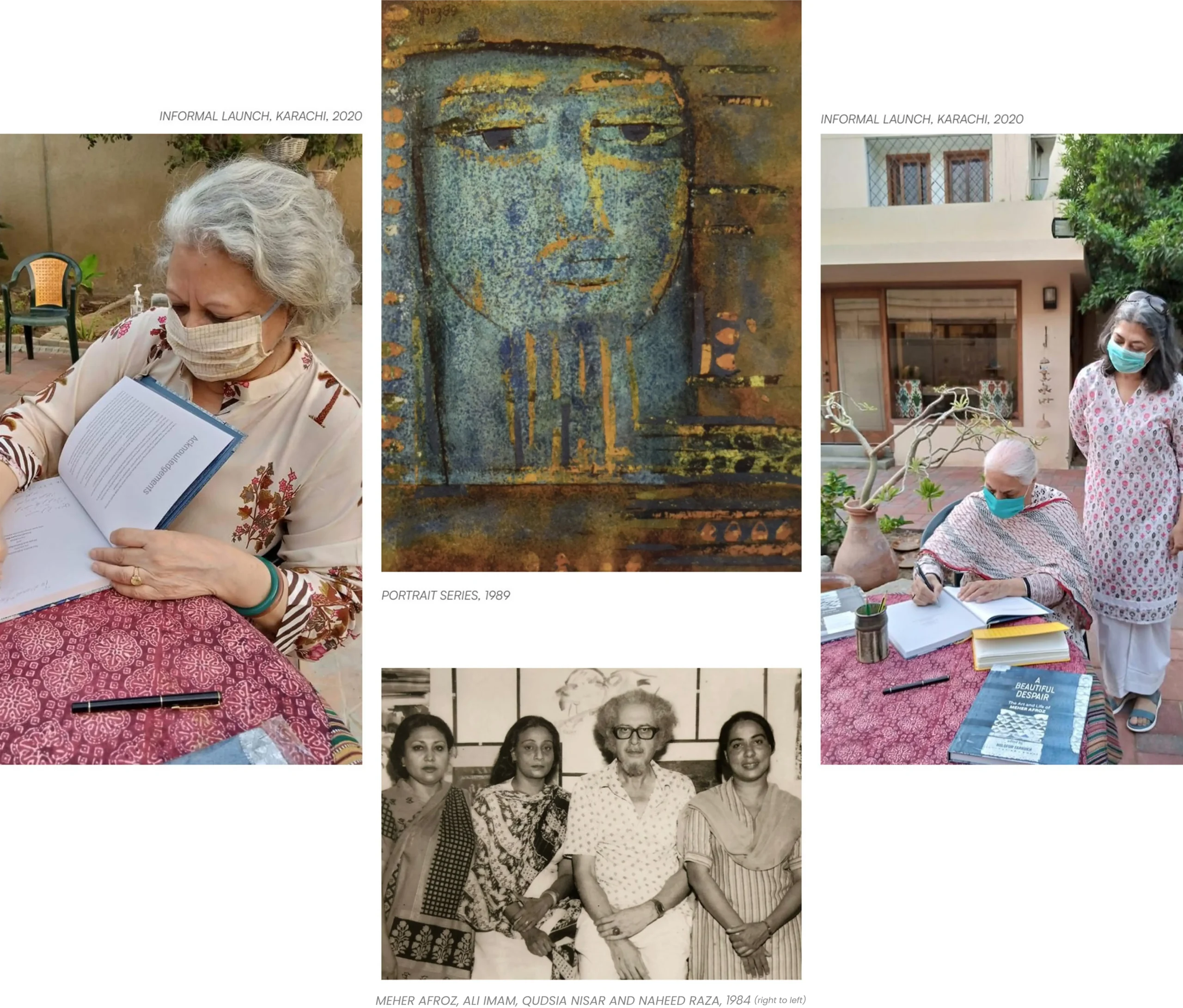
Informal Launch, Karachi, 2020

Portrait series, 1989

MEHR afroz, ali imam, qudsia nisar and naheed raza, 1984 (right to left)

Informal Launch, Karachi, 2020

Informal Launch, Karachi, 2020

Portrait series, 1989

MEHR afroz, ali imam, qudsia nisar and naheed raza, 1984 (right to left)

Informal Launch, Karachi, 2020

BOOK REVIEW

She believes that words in Urdu language have deep meanings that embrace a whole life in it and she can produce a number of series by just taking up a single word.

MORE PUBLICATIONS

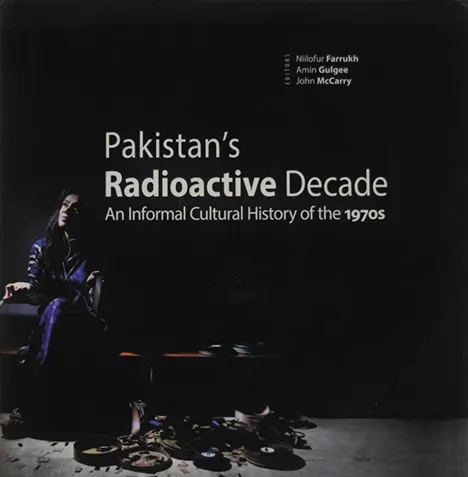
Pakistan’s Radioactive Decade – An informal Cultural History of the 1970s , the book with almost fifty interviews and texts by intergenerational writers, maps a decade remembered both for tragedy and cultural resurgence.
2019
Pioneering Perspectives makes visible the seminal work of three Pakistani women artists to counter the disenfranchisement of women under the dictatorship of the 1980s.
1998